
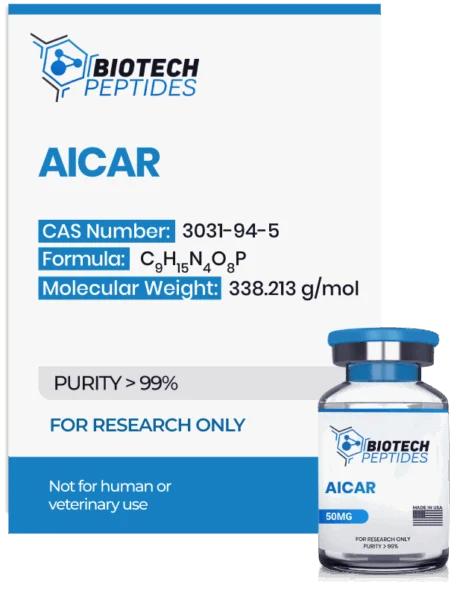
AICAR peptide (10 vials) Original price was: $230.00.$210.00Current price is: $210.00.
Description
AICAR peptide (10 vials)
AICAR peptide (10 vials), scientifically known as 5-Aminoimidazole-4-carboxamide ribonucleotide, is a cell-permeable nucleoside analog that has become a cornerstone in the fields of metabolic research, exercise physiology, and cardiology. Often referred to by its experimental name, Acadesine, AICAR has garnered significant attention for its ability to activate AMP-activated protein kinase (AMPK) without the need for physical exertion. For laboratories and research institutions investigating the mechanisms of energy homeostasis, endurance, and metabolic disorders, a 10-vial supply of AICAR offers a robust platform for conducting consistent and high-volume studies.
Mechanism of Action: Activating the Cellular “Fuel Gauge”
The primary mechanism of action for AICAR centers on its role as an AMPK activator. AMPK is an enzyme that acts as the body’s central metabolic “fuel gauge.” It is activated when cellular energy levels are low (indicated by a high ratio of AMP to ATP), signaling the cell to switch from consuming energy to producing it.
Once AICAR enters a cell, it is converted into ZMP (5-aminoimidazole-4-carboxamide ribonucleotide), which mimics the effects of AMP. This binding to the AMPK enzyme tricks the cell into believing it is in a state of energy deficit. Consequently, the cell initiates a cascade of metabolic processes: it increases glucose uptake, enhances fatty acid oxidation (burning fat for fuel), and stimulates mitochondrial biogenesis. Through this pathway, AICAR effectively mimics the physiological changes that occur during endurance exercise, earning it the reputation of an “exercise mimetic” in scientific literature.
Research Applications and Potential
The implications of AICAR’s mechanism are vast, providing researchers with a tool to dissect the relationship between metabolism and disease.
- Endurance and Performance: In landmark preclinical studies involving mice, AICAR administration was shown to increase running endurance by up to 44% even in sedentary animals. It achieved this by triggering the genetic pathways that usually respond to aerobic training. This makes AICar a critical subject for research into muscle physiology and the treatment of muscle-wasting conditions.
- Diabetes and Metabolic Syndrome: By stimulating glucose uptake in skeletal muscle independently of insulin, AICAR presents a promising avenue for diabetes research. Studies focus on its potential to lower blood sugar levels and improve insulin sensitivity, offering hope for novel therapeutic strategies for Type 2 diabetes.
- Cardioprotection: AICAR has been studied extensively for its protective effects on the heart. Research suggests that it can protect cardiac tissue against ischemia-reperfusion injury (damage caused when blood flow returns to the heart after a period of lack of oxygen). This has implications for improving outcomes during and after heart attacks or cardiac surgery.
The 10-Vial Configuration: Ensuring Stability and Consistency
The procurement of AICAR in a 10-vial configuration is specifically tailored to meet the methodological needs of scientific research. Peptides and nucleosides can be sensitive to environmental factors such as humidity and temperature fluctuations. A bulk supply divided into individual vials mitigates the risk of degradation.
In a research setting, “freeze-thaw” cycles—the process of taking a vial out of the freezer, letting it thaw, and returning it—can break down the molecular structure of the compound, reducing its efficacy. The 10-vial format allows researchers to keep the majority of the supply in deep freeze (usually -20°C) while only reconstituting a single vial at a time for active use. This ensures that the dosage administered in week ten of a study is chemically identical to the dosage administered in week one, thereby preserving the validity of the experimental data.
Reconstitution and Handling
AICAR typically arrives in a lyophilized (freeze-dried) powder form to maximize shelf life. For use in vitro or in vivo, it must be reconstituted with a bacteriostatic solvent, such as bacteriostatic water or sterile saline. The solution is generally stable for a limited period once mixed, necessitating careful planning by the research team. Handling requires strict adherence to aseptic techniques to prevent contamination, which could compromise cell cultures or experimental animals.
Safety and Regulatory Disclaimer
While AICAR has been used in clinical trials for conditions like cardiac ischemia, the peptide supplied in vials is strictly intended for research purposes only. It is not intended for human consumption or use as a dietary supplement. Researchers should be aware that because AICAR affects glucose metabolism, it can cause hypoglycemia (low blood sugar) in test subjects. Furthermore, it has been banned by the World Anti-Doping Agency (WADA) due to its performance-enhancing potential. All handling must be conducted by qualified professionals in a controlled laboratory environment, wearing appropriate Personal Protective Equipment (PPE).
Conclusion
AICAR stands as a powerful tool in the exploration of metabolic regulation. Its ability to activate AMPK and simulate the effects of exercise provides a unique window into the body’s energy management systems. The 10-vial supply provides laboratories with the stability and resource necessary to unlock new treatments for diabetes, heart disease, and metabolic dysfunction, solidifying AICAR’s status as a vital asset in biomedical research.


)
Reviews
There are no reviews yet.