
Description
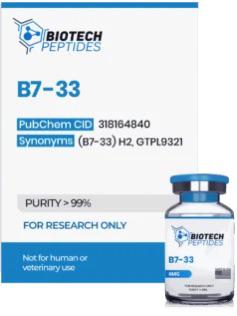
B7-33 Peptide (10 vials)
B7-33 peptide (10 vials) is a synthetically produced peptide that represents a major advancement in the field of regenerative medicine and peptide therapeutics. Derived from the C-terminus of the H2-relaxin hormone, B7-33 is a specifically designed sequence engineered to retain the potent tissue-protective and anti-fibrotic properties of its parent hormone while eliminating unwanted side effects. For research laboratories focused on fibrosis, wound healing, and vascular protection, the availability of B7-33 in a 10-vial supply provides a critical resource for studying one of the most promising therapeutic agents in modern biotechnology.
Mechanism of Action: Biased Agonism of RXFP1
The scientific significance of B7-33 lies in its unique mechanism of action. It functions as a “biased agonist” at the Relaxin Family Peptide Receptor 1 (RXFP1). In natural physiology, the relaxin hormone binds to this receptor to trigger various signaling pathways. However, full-length relaxin activates a broad range of signals, including some that can lead to undesirable vascular effects, such as the potential promotion of tumor growth or severe hypotension (low blood pressure).
B7-33 bypasses these issues. It has been structurally modified to selectively activate the pERK and PI3K-Akt pathways—pathways associated with tissue repair, collagen breakdown, and cell survival—while avoiding the cAMP pathway often linked to the side effects mentioned above. This targeted activation allows B7-33 to actively combat fibrosis (the thickening and scarring of connective tissue) by inhibiting the activation of myofibroblasts, the cells responsible for depositing scar tissue. Furthermore, it exerts powerful anti-inflammatory effects by modulating the immune response and reducing the expression of pro-inflammatory cytokines.
Research Applications and Potential
The potential applications of B7-33 in research are vast, covering several critical areas of medical science:
- Treatment of Fibrosis: This is the primary domain of B7-33 research. Fibrosis is a contributing factor in nearly 50% of all deaths in the industrialized world, affecting organs such as the heart, lungs, liver, and kidneys. B7-33 has been shown in preclinical models not just to prevent the formation of scar tissue but, more impressively, to reverse established fibrosis. This makes it a subject of intense study for conditions like idiopathic pulmonary fibrosis (IPF), liver cirrhosis, and cardiac remodeling after a heart attack.
- Wound Healing and Scar Reduction: By regulating the deposition of collagen and promoting the alignment of collagen fibers, B7-33 research explores improved wound healing outcomes. Studies suggest it can lead to faster closure of wounds with significantly reduced scarring, making it highly relevant for dermatological and surgical research.
- Vascular Protection: B7-33 protects endothelial cells (the lining of blood vessels) from damage and inflammation. This has implications for research into sepsis, acute respiratory distress syndrome (ARDS), and diabetes-related vascular complications.
The 10-Vial Configuration: Ensuring Stability for Long-Term Studies
The packaging of B7-33 in a 10-vial configuration is strategically designed to support the rigorous demands of experimental research. Peptides are delicate molecules that can degrade when exposed to repeated temperature changes or moisture. Studies investigating fibrosis reversal are inherently long-term, often requiring daily or frequent dosing over several weeks or months.
A 10-vial supply allows researchers to adhere to a strict “open-once” protocol. The majority of the vials can be stored in a freezer at -20°C, ensuring the peptide remains in a stable, lyophilized (freeze-dried) state. Only one vial needs to be reconstituted at a time for active use. This prevents the degradation of the entire stock through “freeze-thaw” cycles, ensuring that the potency of the peptide remains consistent from the first dose to the last, thereby guaranteeing the reliability of the collected data.
Reconstitution and Handling
B7-33 arrives in a vial as a white, lyophilized powder. To prepare it for research applications, it must be reconstituted with a suitable solvent, typically bacteriostatic water or sterile water for injection. The solution is generally clear and requires gentle swirling to dissolve. As with all peptides, aseptic technique is crucial during reconstitution to prevent bacterial contamination, which could invalidate research results or harm cell cultures/animal models.
Safety and Regulatory Disclaimer
It is imperative to emphasize that B7-33 is strictly intended for research purposes and laboratory testing only. It is not intended for human consumption, veterinary use, or as a diagnostic agent. While B7-33 is designed to reduce the side effects associated with full-length relaxin, it is a potent biologically active compound. All handling must be conducted by qualified professionals in a controlled laboratory environment, wearing appropriate Personal Protective Equipment (PPE) and adhering to all relevant safety guidelines.
Conclusion
B7-33 stands at the cutting edge of anti-fibrotic research, offering hope for treating conditions that were previously considered irreversible. Its ability to selectively activate repair pathways without triggering harmful side effects makes it a superior candidate for study compared to its natural counterparts. The 10-vial supply provides the necessary logistical framework for researchers to delve deep into its capabilities, potentially unlocking new therapies for millions of people suffering from chronic scarring and organ failure.

)
Reviews
There are no reviews yet.