
Description
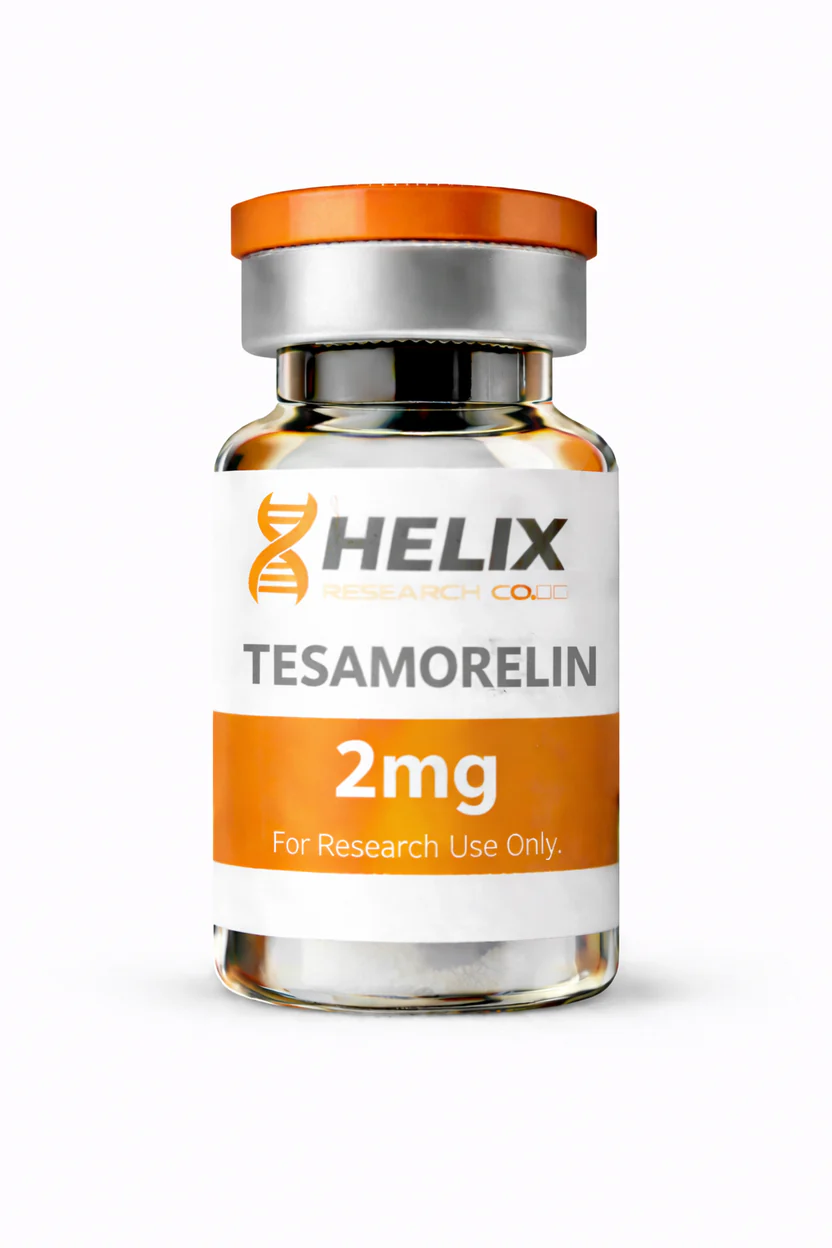
Tesamorelin 2mg (10 vials)
Tesamorelin 2mg (10 vials) is a synthetic peptide analog of Growth Hormone-Releasing Hormone (GHRH). Comprising 44 amino acids, it is specifically engineered to stimulate the production and release of endogenous Growth Hormone (GH) from the pituitary gland. What distinguishes Tesamorelin from other peptides in its class is a unique trans-3-hexenoic acid moiety attached to the amino terminus, which protects it from enzymatic degradation, thereby significantly extending its half-life. For research institutions and laboratories focused on HIV-associated lipodystrophy, metabolic syndrome, and cognitive decline, the availability of Tesamorelin in a 2mg, 10-vial supply provides a robust framework for conducting high-precision, long-term studies.
Mechanism of Action: Mimicking Natural Pulses
The primary mechanism of action of Tesamorelin is the direct stimulation of the pituitary GHRH receptor. Unlike synthetic Human Growth Hormone (HGH), which replaces the hormone directly and can shut down the body’s natural production, Tesamorelin functions as a secretagogue. It signals the pituitary gland to increase its own pulsatile secretion of GH.
This increase in GH subsequently drives the liver to produce Insulin-like Growth Factor 1 (IGF-1), which mediates most of the anabolic and metabolic effects of growth hormone. A key advantage of Tesamorelin in research is its ability to stimulate these hormones while largely maintaining the body’s natural feedback loops and circadian rhythm. By targeting visceral adipose tissue (VAT), the peptide promotes lipolysis (fat breakdown) specifically in the abdominal cavity, an area often resistant to diet and exercise.
Research Applications and Potential
The scope of Tesamorelin research is diverse, covering critical areas of metabolic health, body composition, and neurology.
- HIV-Associated Lipodystrophy: This is the most well-documented area of Tesamorelin research. Patients with HIV often suffer from excess accumulation of visceral fat in the abdomen due to both the virus and antiretroviral therapy. Studies have extensively utilized Tesamorelin to demonstrate the significant reduction of this deep visceral fat, distinguishing it from subcutaneous fat loss.
- Cognitive Function and Neuroprotection: Emerging research is exploring the effects of Tesamorelin on the brain. Growth Hormone and IGF-1 play crucial roles in neuronal maintenance, myelination, and synaptic plasticity. Current studies are investigating whether Tesamorelin can improve cognitive function, memory, and processing speed in individuals with mild cognitive impairment (MCI) or age-related cognitive decline.
- Cardiovascular Health: Because excess visceral fat is a major risk factor for cardiovascular disease, researchers are studying the indirect cardiovascular benefits of Tesamorelin. This includes its potential to reduce carotid intima-media thickness (cIMT) and improve lipid profiles by lowering triglycerides.
The 10-Vial Configuration: Optimizing Daily Dosing Protocols
The packaging of Tesamorelin in 2mg, 10-vial configurations is strategically designed to align with standard research protocols which often involve daily administration. In clinical and preclinical settings, Tesamorelin is typically administered once daily to maintain stable levels of stimulation.
The 10-vial supply allows researchers to manage these protocols without the risk of degradation associated with larger containers. Peptides in lyophilized (freeze-dried) form are hygroscopic and can degrade when exposed to moisture or warm temperatures repeatedly. By using a “one-vial-at-a-time” approach, researchers can store the bulk of the supply in a freezer at -20°C. This prevents the damage caused by “freeze-thaw” cycles, ensuring that the chemical potency and purity of the peptide are consistent from the first dose to the last. This stability is paramount for obtaining reliable data in studies that span several weeks.
Reconstitution and Handling
Tesamorelin arrives in a vial containing 2mg of lyophilized powder. To prepare the peptide for research applications, it must be reconstituted with a suitable bacteriostatic solvent, such as bacteriostatic water or sodium chloride solution. The solvent should be injected slowly down the side of the vial to prevent foaming, and the vial should be gently swirled until the powder is completely dissolved. Once reconstituted, the solution is generally stable for a limited period and must be stored in a refrigerator (typically 2°C to 8°C). Strict aseptic techniques are essential during this process to prevent bacterial contamination, which could invalidate experimental results or affect animal models.
Safety and Regulatory Disclaimer
It is imperative to emphasize that Tesamorelin is strictly intended for research purposes and laboratory testing only. It is not intended for human consumption, diagnosis, or treatment. While Tesamorelin is an FDA-approved medication for specific conditions (under the brand name Egrifta), the peptide supplied in research vials is designated for preclinical use only. Researchers should be aware that potential side effects in test subjects can include injection site reactions, increased blood sugar levels (glucose intolerance), and fluid retention. All handling must be conducted by qualified professionals in a controlled laboratory environment, wearing appropriate Personal Protective Equipment (PPE) and adhering to all relevant safety guidelines.
Conclusion
Tesamorelin stands as a highly sophisticated tool in the arsenal of metabolic and neuroendocrine research. Its ability to specifically target visceral fat and stimulate the body’s natural hormonal pathways without replacing them makes it a superior subject of study compared to synthetic GH. The 10-vial, 2mg supply provides the logistical stability and dosing precision necessary for researchers to delve deeper into its therapeutic potential, potentially unlocking new treatments for metabolic diseases and cognitive disorders.


)
Reviews
There are no reviews yet.