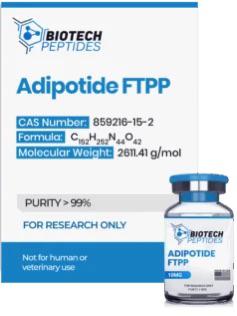
Adipotide FTPP Peptide (10 vials)
Adipotide FTPP peptide (10 vials), scientifically known as Fat Targeted Proapoptotic Peptide (FTPP), represents a bold and innovative departure from traditional weight management methodologies. Unlike conventional appetite suppressants or metabolic stimulants, Adipotide functions as a proapoptotic agent that directly targets the blood vessels supplying adipose tissue. For research institutions and laboratories focused on obesity, metabolic syndrome, and angiogenesis, the acquisition of Adipotide in a 10-vial supply offers a robust framework for conducting advanced in vitro and in vivo studies.
Mechanism of Action: Starving the Fat
The defining characteristic of Adipotide is its unique mechanism of action, which attacks obesity at its vascular source. Adipotide is a peptidomimetic—a small protein-like chain designed to mimic a peptide—which consists of a homing domain and a cytotoxic domain.
The mechanism begins with the homing domain, which binds specifically to two receptors: Prohibitin and ANXA2. These receptors are uniquely expressed on the surface of the endothelial cells that line the blood vessels feeding white adipose tissue (body fat). Once Adipotide has successfully “homed” in on these blood vessels, the cytotoxic domain (a sequence derived from a protein) is internalized by the cell. This triggers a process of apoptosis, or programmed cell death, specifically within the blood vessels.
By destroying the vasculature that supplies nutrients and oxygen to the fat cells, Adipotide effectively cuts off the lifeline of the adipose tissue. The result is ischemia (lack of blood supply) leading to the subsequent reabsorption and metabolization of the dead fat cells by the body. This “vascular disruption” strategy allows researchers to study the direct ablation of fat stores without relying on systemic metabolic changes.
Research Applications and Potential
The primary focus of Adipotide research has been the treatment of obesity. In preclinical studies, particularly involving rhesus monkeys, Adipotide demonstrated a profound ability to reduce body weight and body mass index (BMI) by selectively destroying white fat deposits. Interestingly, research indicated that the weight loss was not merely due to a reduction in food intake, as the test subjects did not significantly reduce their caloric consumption. This suggests that FTPP bypasses the hypothalamic regulation of hunger, offering a potential solution for biological resistance to weight loss.
Beyond simple weight reduction, Adipotide is a critical tool for studying the role of angiogenesis (the formation of new blood vessels) in fat tissue maintenance. It provides researchers with a model to understand how adipose tissue regenerates and how the vascular network supports the expansion of fat cells. Furthermore, studies are exploring its potential application in type 2 diabetes management, as the reduction of visceral fat is closely linked to improved insulin sensitivity.
The 10-Vial Kit: Optimizing Experimental Design
The availability of Adipotide in a 10-vial configuration is specifically designed to support rigorous scientific inquiry. Because FTPP is a complex molecule, stability and precise dosing are paramount. The 10-vial format allows researchers to conduct longitudinal studies—observing the effects of the peptide over extended periods—without compromising the integrity of the compound through repeated freeze-thaw cycles.
In a research setting, this packaging facilitates dose-escalation studies. Scientists can utilize different vials to test varying concentrations to determine the therapeutic window and efficacy thresholds. This ensures that the data collected is consistent and that the peptide’s potency is preserved from the first day of the trial to the last.
Reconstitution and Handling
Adipotide typically arrives in a lyophilized (freeze-dried) powder state to maintain its stability. For research applications, it must be reconstituted with bacteriostatic water or sterile water, depending on the specific protocol of the study. Once reconstituted, the solution creates an environment where the peptide is bioactive and ready for administration in animal models. Proper handling involves maintaining a sterile environment to prevent contamination, which could skew experimental results or cause adverse reactions in test subjects.
Safety and Ethical Considerations
It is imperative to emphasize that Adipotide (FTPP) is strictly intended for research purposes only. It is not a dietary supplement, nor is it intended for human consumption. Previous clinical trials in humans were halted due to safety concerns, specifically regarding kidney toxicity (nephrotoxicity). Researchers handling this peptide must be aware of its potent mechanism and the potential risks involved. Strict safety protocols, including the use of appropriate Personal Protective Equipment (PPE) and adherence to institutional guidelines for the disposal of biohazardous materials, are mandatory.
Conclusion
Adipotide (FTPP) offers a fascinating glimpse into the future of obesity treatment by targeting the blood supply of fat cells rather than the appetite centers of the brain. The 10-vial supply provides laboratories with the necessary resources to explore this radical mechanism of action in depth. As the scientific community continues to search for effective treatments for metabolic diseases, Adipotide remains a potent and valuable tool in the arsenal of modern pharmacological research.


Be the first to review “Adipotide FTPP Peptide (10 vial)”