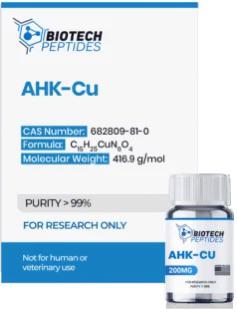
AHK-Cu peptide (10 vials)
AHK-Cu peptide (10 vials) (Copper Tripeptide-1) is a sophisticated peptide complex that has emerged as a focal point in the fields of dermatological research, wound healing, and hair restoration science. Composed of the tripeptide Alanine-Histidine-Lysine bound to a copper ion, AHK-Cu harnesses the biological potency of copper—a vital trace element—while utilizing the peptide as a delivery vehicle to target specific cells. For research laboratories investigating the mechanisms of skin repair, anti-aging, and androgenetic alopecia, the availability of AHK-Cu in a 10-vial supply provides a comprehensive resource for conducting high-fidelity, long-term studies.
Mechanism of Action: The Role of Copper
The therapeutic potential of AHK-Cu is rooted in the critical role copper plays in human physiology. Copper is an essential cofactor for numerous enzymes, known as cuproenzymes, which are involved in tissue repair and antioxidant defense. When the AHK peptide delivers copper directly into the cells, it stimulates the production of these enzymes.
Most notably, AHK-Cu activates lysyl oxidase, an enzyme critical for the cross-linking of collagen and elastin. This process provides structural integrity and tensile strength to the extracellular matrix. Additionally, copper is a key component of Superoxide Dismutase (SOD), one of the body’s primary natural antioxidants. By facilitating the removal of free radicals, AHK-Cu reduces oxidative stress, a major contributor to cellular aging and inflammation. Furthermore, research indicates that AHK-Cu can influence the expression of growth factors, such as VEGF (Vascular Endothelial Growth Factor), promoting angiogenesis—the formation of new blood vessels—which is essential for delivering nutrients to damaged tissues or hair follicles.
Research Applications: Skin and Hair
The versatility of AHK-Cu makes it a subject of intense study across two primary domains: cutaneous biology and trichology (the study of hair).
- Wound Healing and Anti-Aging: In skin research, AHK-Cu is investigated for its ability to accelerate wound closure and reduce scarring. By upregulating collagen and elastin synthesis, it helps restore the skin’s mechanical properties. Studies also focus on its capacity to diminish the appearance of fine lines and wrinkles by firming the dermal matrix and reducing inflammation associated with photoaging.
- Hair Growth Restoration: Perhaps the most compelling area of AHK-Cu research involves its potential to combat hair loss. The survival and growth of hair follicles are heavily dependent on the blood supply surrounding them. By promoting angiogenesis via VEGF, AHK-Cu ensures that hair follicles receive adequate oxygen and nutrients. Additionally, there is evidence suggesting that AHK-Cu may inhibit the activity of 5-alpha-reductase, the enzyme responsible for converting testosterone into dihydrotestosterone (DHT). Since DHT is the primary hormone responsible for pattern baldness, AHK-Cu offers a dual mechanism of action: nourishing the follicle while potentially blocking the hormonal trigger for shrinkage.
The 10-Vial Configuration: Preserving Potency
The packaging of AHK-Cu in a 10-vial set is a strategic choice designed to maintain the chemical stability of this oxidation-sensitive complex. Copper peptides can degrade if exposed repeatedly to air or fluctuations in temperature, leading to a loss of efficacy and a change in the solution’s characteristic blue color.
By dividing the supply into individual vials, researchers can store the majority of the product at optimal freezing temperatures (typically -20°C), removing only one vial at a time for immediate reconstitution and use. This “single-use” protocol prevents the contamination and degradation that can occur when a larger container is opened and closed multiple times. For studies requiring daily or weekly dosing over a period of months, this format ensures that the compound administered at the end of the study is just as potent as the compound used at the beginning, thereby guaranteeing data consistency.
Reconstitution and Handling
AHK-Cu typically arrives in a lyophilized powder form to preserve the stability of the copper-peptide bond. Reconstitution is performed using bacteriostatic water or sterile water for injection. Upon mixing, the solution should turn a clear to slightly blue hue, indicating proper solubilization of the copper complex. Researchers must handle the peptide with care, using sterile syringes and maintaining a clean environment to prevent bacterial growth, as contaminated solutions can invalidate experimental results.
Safety and Regulatory Disclaimer
While AHK-Cu is a naturally occurring complex in the body, the synthetic peptide supplied in these vials is strictly intended for research and laboratory purposes only. It is not intended for human consumption, topical application, or diagnostic use. Researchers should be aware that while copper is essential, elevated levels can be toxic; therefore, precise dosing in experimental models is critical. All handling should be performed by qualified professionals wearing appropriate Personal Protective Equipment (PPE) in accordance with institutional safety guidelines.
Conclusion
AHK-Cu represents a powerful intersection of peptide technology and micronutrient science. Its ability to stimulate collagen, promote blood vessel growth, and potentially inhibit hair loss mechanisms makes it an invaluable asset in regenerative medicine research. The 10-vial supply format provides the stability and logistical flexibility necessary for researchers to unlock the full potential of this copper peptide, paving the way for innovations in skincare and hair restoration therapies.
Reviews
There are no reviews yet.
Related products
Peptide
Peptide
Peptide
Peptide
Peptide
Be the first to review “AHK-Cu peptide (10 vials)”