
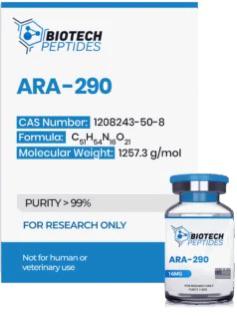
ARA-290 Peptide (10 vials)
ARA-290 peptide (10 vials), is a synthetic 11-amino acid peptide derived from the tertiary structure of Erythropoietin (EPO). While EPO is well-known for its role in stimulating red blood cell production, ARA-290 has been engineered to isolate the tissue-protective and anti-inflammatory properties of the hormone without its erythropoietic effects. This distinction makes it a highly specialized subject of study in the fields of immunology, neurology, and chronic pain management. For research laboratories investigating the mechanisms of neuropathic pain and tissue repair, the availability of ARA-290 in a 10-vial supply offers a structured and reliable resource for conducting advanced preclinical trials.
Mechanism of Action: The Innate Repair Receptor
The scientific intrigue surrounding ARA-290 centers on its interaction with the Innate Repair Receptor (IRR). The IRR is a heteromeric receptor composed of the Erythropoietin Receptor (EPOR) and the Beta-Common Receptor (βcR/CD131). Unlike the classical EPO receptor, which is primarily involved in hematopoiesis (blood cell production), the IRR is expressed locally in tissues during injury, inflammation, or ischemia.
When ARA-290 binds to the IRR, it initiates a powerful cascading response. It acts as a selective agonist that downregulates pro-inflammatory cytokines, such as TNF-alpha and IL-6, while upregulating anti-inflammatory mediators. Crucially, this mechanism involves the activation of the JAK2/STAT5 and PI3K/Akt pathways, which promote cell survival and reduce apoptosis (programmed cell death). Furthermore, ARA-290 has been shown to modulate the immune system by interacting with macrophages, shifting them from a pro-inflammatory M1 state to a reparative M2 state. This allows for the clearance of damaged tissue and the initiation of healing without triggering the body’s global immune alarm system.
Research Applications and Potential
ARA-290 is primarily investigated for its potential to treat conditions characterized by chronic inflammation and nerve damage.
- Neuropathic Pain: This is the most prominent area of ARA-290 research. Studies have focused on its efficacy in treating small fiber neuropathy (SFN), a condition often associated with diabetes, sarcoidosis, and fibromyalgia. Research suggests that ARA-290 can repair damaged nerve endings and normalize the function of nociceptors (pain-sensing nerves), thereby significantly reducing pain and improving sensation.
- Autoimmune Diseases: Because of its ability to dampen the inflammatory response without suppressing the entire immune system, ARA-290 is being studied as a potential therapeutic for autoimmune disorders like multiple sclerosis (MS) and rheumatoid arthritis.
- Organ Protection: Research indicates that ARA-290 may protect tissues against ischemia-reperfusion injury (damage caused when blood supply returns to tissue after a period of oxygen deprivation). This has implications for research involving kidney transplants, myocardial infarction (heart attack), and retinal diseases.
The 10-Vial Configuration: Ensuring Experimental Integrity
The packaging of ARA-290 in a 10-vial configuration is designed to support the rigorous demands of longitudinal research. Studies investigating neuropathic pain and tissue regeneration often require prolonged dosing schedules, sometimes lasting several weeks or months. Peptides are inherently sensitive biomolecules that can degrade when exposed to fluctuating temperatures or repeated handling.
By utilizing a 10-vial kit, researchers can implement a strict “single-use” protocol. The majority of the supply can be stored in a freezer at the recommended -20°C, preserving the peptide’s structural integrity. One vial is reconstituted at a time for immediate use, ensuring that the remaining vials are never subjected to the degradation caused by freeze-thaw cycles. This compartmentalization is vital for maintaining dosing accuracy, ensuring that the biological effects observed at the end of a study are consistent with those at the beginning.
Reconstitution and Handling
ARA-290 typically arrives in a lyophilized (freeze-dried) powder state to maximize its shelf life and stability during transport. To prepare the peptide for in vitro or in vivo application, it must be reconstituted with a suitable solvent, such as bacteriostatic water or sterile saline. The solution is generally clear and requires gentle swirling to dissolve, avoiding vigorous shaking which can denature the peptide. Once reconstituted, the stability of the solution is time-limited, necessitating prompt use or appropriate refrigeration. Researchers must adhere to aseptic techniques to prevent contamination, which could invalidate experimental outcomes.
Safety and Regulatory Disclaimer
It is critical to emphasize that ARA-290 is strictly intended for research purposes and laboratory testing only. It is not intended for human consumption or diagnostic use. While ARA-290 has shown a favorable safety profile in clinical trials—specifically lacking the cardiovascular risks associated with full-length EPO, such as increased blood clotting—it remains an experimental substance. All handling must be conducted by qualified professionals in a controlled laboratory environment, wearing appropriate Personal Protective Equipment (PPE) and adhering to institutional safety guidelines.
Conclusion
ARA-290 represents a paradigm shift in how researchers approach inflammation and pain management. By targeting the Innate Repair Receptor, it offers the promise of tissue healing and pain relief without the immunosuppressive risks of steroids or the hematological risks of EPO. The 10-vial supply provides the necessary stability and logistical flexibility for researchers to thoroughly explore the therapeutic potential of this remarkable peptide, paving the way for future breakthroughs in the treatment of chronic pain and degenerative diseases.
Reviews
There are no reviews yet.
Related products
Peptide
Peptide
Peptide
Peptide
Peptide
Peptide
Peptide
Be the first to review “ARA-290 Peptide (10 vials)”