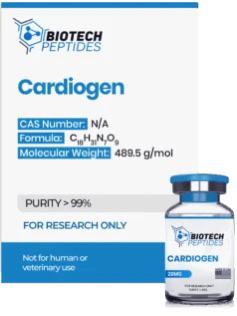
Cardiogen peptide (10 vials)
Cardiogen peptide (10 vials) is a specialized synthetic bioregulatory peptide that has emerged as a focal point in the field of cardiology and gerontology. Developed through the analysis of peptide fractions derived from heart tissue, Cardiogen belongs to the class of cytomax peptides—short chains of amino acids that are tissue-specific. Its primary function is to regulate the metabolic processes within cardiac cells, promoting cellular repair and reducing the effects of aging on the cardiovascular system. For research institutions and laboratories investigating heart failure, myocardial recovery, and age-related cardiac degeneration, the availability of Cardiogen in a 10-vial supply provides a critical resource for conducting longitudinal and in-depth studies.
Mechanism of Action: Restoring Cellular Function
The mechanism of action of Cardiogen distinguishes it from generic cardiovascular drugs. Unlike beta-blockers or ACE inhibitors which manage hemodynamics, Cardiogen operates at the cellular and genetic level. It penetrates the cell membrane of cardiomyocytes (heart muscle cells) and interacts with the DNA within the nucleus.
This interaction is selective; Cardiogen stimulates the synthesis of specific proteins that are essential for the normal structure and function of heart tissue. It essentially “reboots” the genetic machinery of the cell, encouraging it to revert to a more youthful and functional state. A key aspect of its mechanism is the regulation of fibroblast activity. In a damaged or aging heart, fibroblasts can become overactive, laying down excessive collagen and leading to fibrosis (stiffening of the heart muscle). Cardiogen helps normalize this activity, potentially reducing pathological scar tissue and improving the elasticity and contractility of the myocardium.
Research Applications and Potential
The scope of Cardiogen research encompasses a variety of critical cardiovascular conditions, particularly those involving tissue degradation and aging.
- Myocardial Infarction Recovery: One of the primary areas of research is the role of Cardiogen in post-heart attack recovery. Studies aim to determine if the peptide can limit the zone of necrosis (tissue death) following ischemia and promote more effective repair of the damaged myocardium, potentially preventing the progression to heart failure.
- Chronic Heart Failure: By improving the metabolic efficiency of heart cells and reducing fibrosis, Cardiogen is studied as a potential adjunct therapy for chronic heart failure. Research focuses on its ability to improve the ejection fraction and exercise tolerance in subjects with compromised cardiac function.
- Anti-Aging of the Cardiovascular System: As the heart ages, it undergoes structural changes such as hypertrophy and stiffness. Cardiogen is investigated for its geroprotective properties—its ability to slow down or reverse these age-related changes, thereby extending the healthspan of the cardiovascular system.
- Cardiomyopathy: Research is also exploring its efficacy in various forms of cardiomyopathy, where the heart muscle becomes enlarged, thick, or rigid. By regulating protein synthesis, Cardiogen may help stabilize the structural integrity of the cardiac muscle.
The 10-Vial Configuration: Optimizing Experimental Consistency
The packaging of Cardiogen in a 10-vial configuration is designed to meet the exacting standards of scientific research. In studies involving cardiac regeneration, consistency is paramount; the biological response observed at the start of a trial must be comparable to the response at the end.
Peptides are inherently sensitive molecules that can degrade when exposed to temperature fluctuations or repeated handling. A 10-vial supply allows researchers to utilize a strict compartmentalization strategy. The majority of the supply can be stored in a freezer at the recommended -20°C, ensuring the long-term stability of the lyophilized (freeze-dried) powder. One vial is reconstituted at a time for immediate use. This eliminates the degradation caused by “freeze-thaw” cycles, ensuring that every dose administered during the study is of identical potency and purity.
Reconstitution and Handling
Cardiogen typically arrives in a vial containing lyophilized powder to maximize its shelf life. To prepare the peptide for research applications, it must be reconstituted with a suitable solvent, such as bacteriostatic water or sterile water for injection. The solvent should be injected slowly into the vial and the vial swirled gently until the powder is completely dissolved. Vigorous shaking should be avoided to prevent denaturing the peptide. Once in solution, the peptide is ready for administration in animal models or for in vitro cell culture studies. Strict aseptic techniques are essential to prevent contamination.
Safety and Regulatory Disclaimer
It is imperative to emphasize that Cardiogen is strictly intended for research purposes and laboratory testing only. It is not intended for human consumption, diagnosis, or treatment. While Cardiogen is a bioregulator derived from natural tissue peptides, it is a potent experimental substance. All handling must be conducted by qualified professionals in a controlled laboratory environment, wearing appropriate Personal Protective Equipment (PPE) and adhering to all institutional safety guidelines.
Conclusion
Cardiogen represents a sophisticated approach to cardiovascular health, moving beyond symptom management to target the cellular roots of heart disease and aging. Its ability to regulate gene expression and reduce fibrosis makes it a unique and valuable tool in the researcher’s arsenal. The 10-vial supply provides the stability and logistical flexibility necessary for rigorous scientific inquiry, offering hope for new breakthroughs in the treatment of heart disease and the extension of cardiovascular longevity.
Reviews
There are no reviews yet.
Related products
Peptide
Peptide
Peptide
Peptide
Peptide
Peptide
Peptide
Peptide
Be the first to review “Cardiogen peptide (10 vials)”